
Understanding climate change
Climate includes patterns of temperature, precipitation, humidity, wind and seasons. “Climate change” affects more than just a change in the weather, it refers to seasonal changes over a long period of time. Review the latest Climate Change Indicators.
Additional resources on climate change:
Spokane Climate Project
Spokane Climate Project is a collaborative effort between the Pacific Northwest Climate Impacts Research Consortium (CIRC) and the community of Spokane, Washington. The project’s goals are to identify climate and weather impacts faced by the Spokane community as well as resiliency actions designed to keep the community, its economy, and natural systems healthy and prosperous.
Washington State Department of Ecology resources
The Washington State Department of Ecology’s webpage on Climate Change provides information about how Washington is tackling climate change, including current programs and policies.
How you can reduce greenhouse gases? Most greenhouse gases come from human activities, like burning fossil fuels for transportation or energy. You can help reduce the risks we face from climate change by taking steps to reduce the greenhouse gases coming from your home, vehicle, and activities.
NASA resources
NASA’s Global Climate Change explains how the Earth’s climate has changed throughout history and why the current warming trend is of particular significance. You will find facts, articles, solutions and more here.
ClimateKids
ClimateKids is a resource created by NASA to help children understand the impacts and science of climate change. Kids can explore climate change through games, activities, videos and more.
U.S. Global Change Research Program
U.S. Global Change Research Program (USGCRP) is a federal program mandated by Congress to coordinate federal research and investments in understanding the forces shaping the global environment, both human and natural, and their impacts on society. The website provides a wealth of information, including:
- Climate Science Special Reports and Research Plans
- Just released: The fourth National Climate Assessment Volume II
The Intergovernmental Panel on Climate Change
The Intergovernmental Panel on Climate Change (IPCC) is the United Nations body for assessing the science related to climate change.
The United States Environmental Protection Agency
The United States Environmental Protection Agency:
- Climate Change webpage
- Climate Change Indicators webpage and frequently-asked questions.
NOAA Releases Annual State Of The Climate Report
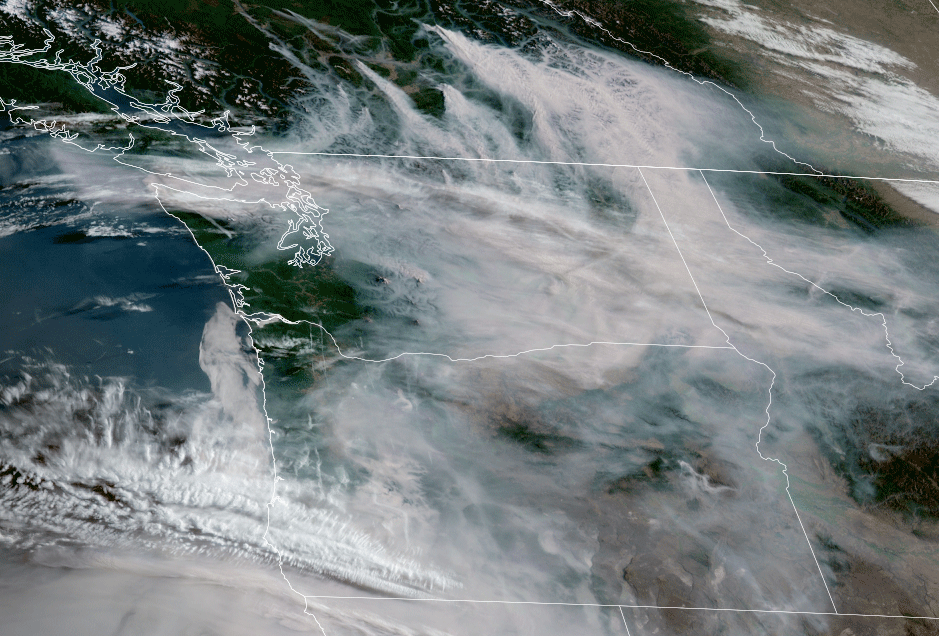
August 26, 2021 – The National Oceanic and Atmospheric Administration (NOAA) has released its 2020 “State of the Climate” report. More than 530 scientists in over 60 countries contributed to the peer-reviewed report which was published in the Bulletin of the American Meteorological Society. The report finds that the global annual average atmospheric CO2 concentration in 2020 was 412.5 ppm, the highest on record; methane concentrations also set a new record.
The State of the Climate report found that 2020 was the warmest year on record without an El Nino. Data also indicate an ongoing transformation of the polar regions, with the highest temperatures ever recorded in Antarctica documented in February 2020. Antarctica also set the record for the longest-lived ozone hole over the Antarctic region in 2020. Read the full report.