
Our priorities for clean air
In our work to protect air quality, we provide many programs and services to residents and businesses in Spokane County. Below is information about some of our key programs:
Air Quality Monitoring & Reporting
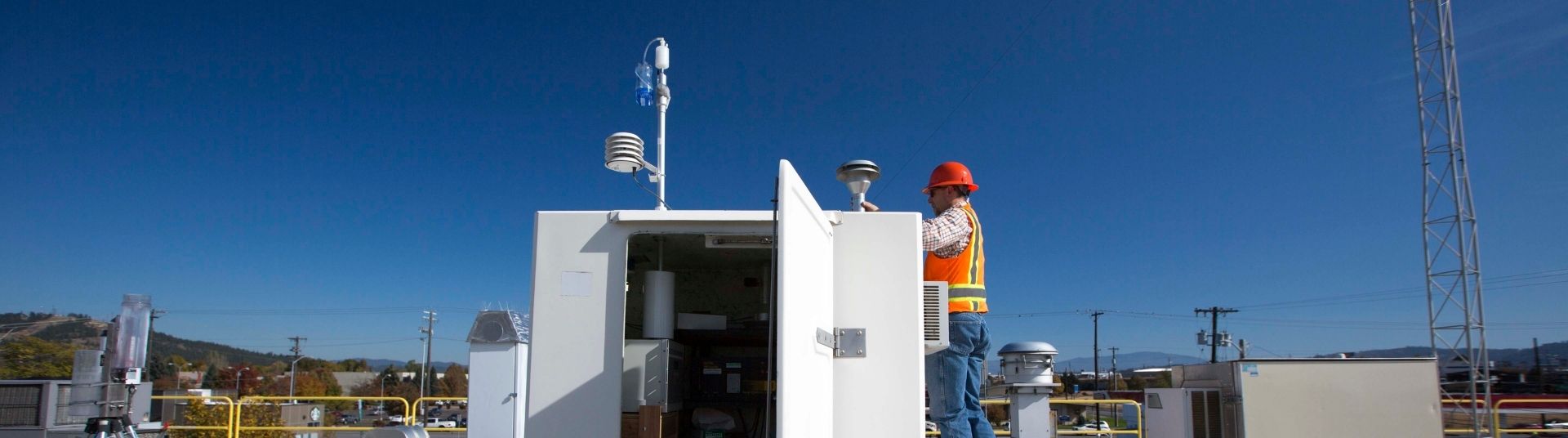
We operate and maintain a network of ambient air quality monitoring stations throughout Spokane County. Hourly data from our monitors, along with meteorological data, enables us to notify the public when air quality is approaching unhealthful levels and to encourage clean air actions to help reduce air pollution. Visit our Current Air Quality page to view our monitoring locations and data.
Asbestos Control during Renovation & Demolition
To protect public health from uncontrolled releases of hazardous asbestos fibers, we work to ensure that asbestos regulations are followed when residential and commercial structures are being renovated or demolished. Learn more
Business Registration & Permitting
We work with local businesses to reduce their air emissions by administering several programs, including:
- Registering (i.e. licensing) over 700 facilities annually
- Conducting compliance inspections
- Issuing air quality permits (Notices of Construction and Portable Source Permits)
- Providing technical assistance to businesses to improve compliance
Community Outreach, Educational Resources
Improving and maintaining healthy air requires all of us working together. Our agency values its community partnerships, which help us reach more people with our clean air messages.
We participate in as many community events as possible. We welcome guest speaking opportunities at local organizations and service clubs.
Our agency believes that one of our most important audiences is our youth. We offer a host of grade-appropriate resources and programs for preschool through college classes, for traditional and non-traditional educators, and for a variety of youth-based and recreational organizations.
Visit our Learning Center for details and contact information.
Complaint Response & Enforcement
Our agency inspectors respond to complaints from citizens about air pollution issues that are affecting them where they work or live. Common air quality complaints are related to excessive smoke from outdoor burning and wood heating, dust from roads and parking lots, and odors from a variety of operations. Inquiries or filing formal complaints may be done by phone or online. Once complaints are logged into our database, they are forwarded to the appropriate inspector for follow-up action.